Agatha Christie, The Mysterious Affair at Styles, 1920
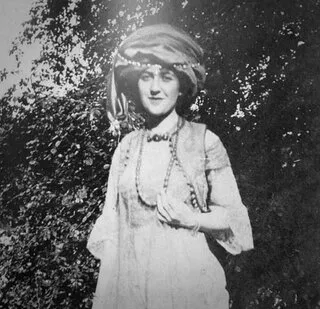 (Agatha Christie (1890-1976)
Agatha Christie is the world's all-time bestselling author. Until now I'd never read anything she wrote. So, here I am, only 105 years after she published her first novel. Better late than never, I suppose.
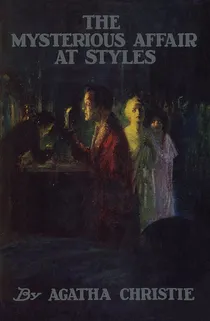
The Mysterious Affair at Styles was Christie's first novel and the first novel to feature one of her most famous detectives, Hercule Poirot:
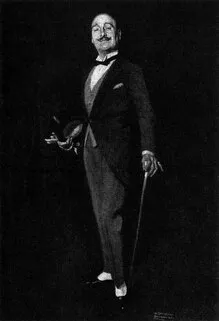
Poirot was famously fussy and particular given to exclaim something in French (Poirot was Belgian) and running of unexpectedly. As fictional detectives go, this is par for the course. Not a neurotypical among them. With the possible exception of Martin Hewitt. Poirot went on to feature in 33 novels, 51 short stories, 2 plays, 5 films, and a television series. And here I am reading a story about him here in 2026.
Styles is set during World War I. The book is narrated by Arthur Hastings, who has been invited to spend time by a friend, John Cavendish to spend some time at Styles, an English country house. Before too much time has passed, the family matriarch, Emily Inglethorp, was poisoned in her bedroom which was, you'll never guess, locked from the inside. As Poirot would (and did) say, "Mon Dieu!" As it happens, Hastings's old friend Hercule Poirot is staying nearby with a few other refugees from Belgium. Quelle coïncidence!
What follows is a twisty tale wherein Poirot tells Hastings, and the reader, of clues but then refuses to tell Hastings, and the reader, what the clues mean. Consider this passage where Poirot asks Hastings to pass a message onto Lawrence, a suspect in the murder:
“By the way, Hastings, there is something I want you to do for me.”
“Certainly. What is it?”
“Next time you happen to be alone with Lawrence Cavendish, I want you to say this to him. ‘I have a message for you, from Poirot. He says: “Find the extra coffee-cup, and you can rest in peace!”’ Nothing more. Nothing less.”
“‘Find the extra coffee-cup, and you can rest in peace.’ Is that right?” I asked, much mystified.
“Excellent.”
“But what does it mean?”
“Ah, that I will leave you to find out. You have access to the facts. Just say that to him, and see what he says.”
Poirot is constantly doing stuff like this, "Here's an important bit of information, but I won't tell you why it is important. There is no reason at all for me to withhold that information, but I will anyway." This little quirk of Christie was making me crazy by the end of the book.
When Christie has Poirot wrap it all up in the classic "I suppose you are all wondering why I asked you here today" manner in the sitting room of the Styles house, every little clue and detail is painstakingly explained. It was Christie, of course, who made scenes like these classic.
Free ebook: https://www.gutenberg.org/ebooks/863
Free abridged audiobook: https://archive.org/details/the-mysterious-affair-at-styles-by-agatha-christie
Episode, Mysterious Affair at Styles from the TV show, Poirot
Reading Gutenberg by John Jackson is licensed under CC BY-SA 4.0

