Fritz Leiber, Conjure Wife, 1943
Before Bewitched, a 1960s sitcom about a hapless ad executive who married a witch, there was Fritz Leiber's Conjure Wife, a horror novel in which a hapless college professor married a witch.
The specific kind of witchery is "conjure magic" We can talk about "conjuring magic aka conjuration" in two ways. The first is the kind of slight-of-hand that professional magicians use to trick and fool their audience into thinking something impossible had just happened: "Is this your card?" or "Look! The coin has been behind your ear the whole time!" This usage goes back at least a century. Consider the title of Harry Houdini's magazine, for example:
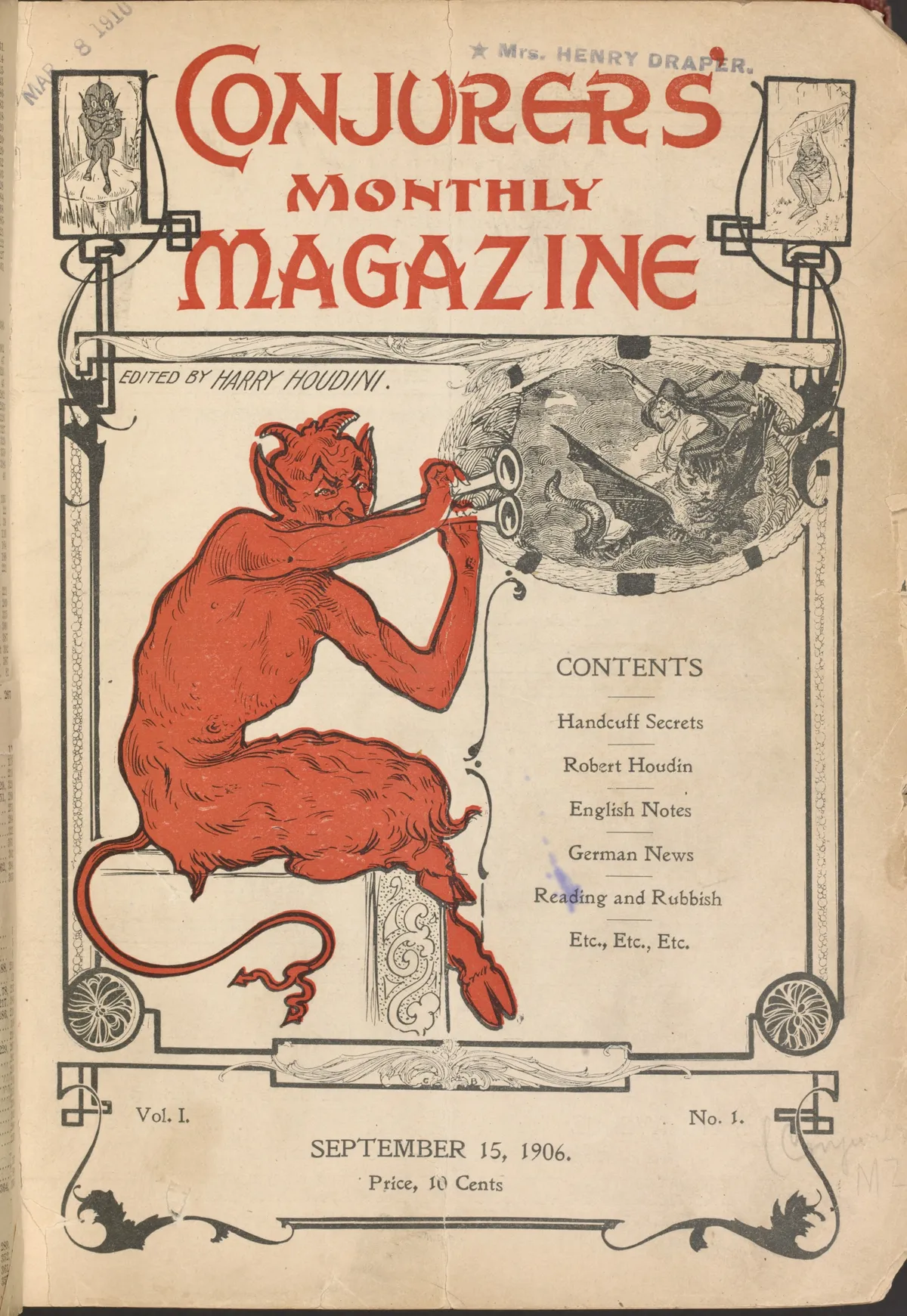
Houdini was dedicated to unmasking fraudulent "spiritualists" hoodwinking their gullible marks into thinking magic was real by using "conjuring magic" that professional magicians knew well as tricks. For example, some of the oldest conjuring tricks is the classic "cups and balls" which dates back centuries:
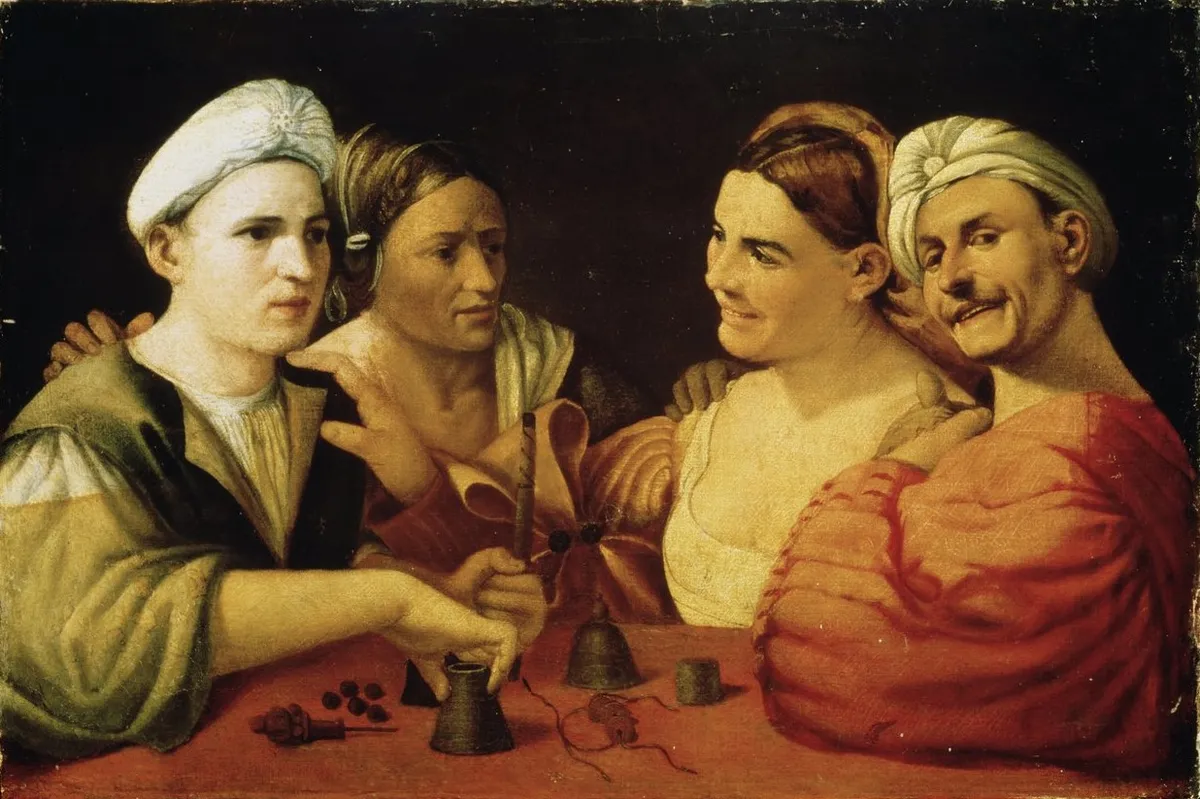 The Conjurers, by Dosso Dossi (1489-1542).
The second way we could think about conjure magic is as a serious anthropological and historical phenomenon. These scholarly studies examine the role of conjure magic in societies where it served social functions. Our hapless professor, Norman Saylor, in Conjure Wife is an anthropologist who studies conjure magic among different societies aided by his wife, Tansy. One suspects, as was often the case with academic couples in the mid-twentieth century that Tansy did substantially more than type up manuscripts and was a full collaborator in Norman's work without receiving even a modicum of credit.
Tansy, however, has been doing quite a bit more for Norman. When Norman enters the forbidden land of Tansy's dressing room, he discovers evidence that she has been practicing conjure magic to protect him from his academic rivals:
Packets of small dried leaves and powdered vegetable matter—so that was what came from Tansy's herb garden along with kitchen seasonings? Vervain, vinmoin, devil's snuff. Bits of lodestone, iron filings clinging to them. Goose quills which spilled quicksilver when he shook them. Small squares of flannel, the sort that Negro conjure doctors employed for their "tricken-bags" or "hands." A box of old silver coins and silver filings—strong protective magic; giving significance to the coins, all silver, in front of his photograph.
In his professional arrogance Norman dismisses the reality of what he sees as Tansy falling victim to trickery and foolishness, perhaps she is actually losing her sanity. He convinces her to destroy all of the magic artifacts and walk the straight and narrow path of scientific rationality.
Disaster, of course ensues. It turns out all women are witches, secretly battling each other to aid the careers of their husbands at the small college where they all work. Norman loses his bid to become department chair, Leiber under the impression that the chair as a prize that professors would do anything to win. In reality, being a chair is usually regarded as a burden to be avoided and only reluctantly accepted when it is "your turn" to assume it. Much, much worse things follow.
Leiber lays out the story with rigor and supplies a wonderfully twisty-turny ending. The book perfectly reflects the oppressive sexist culture of its time but inverts it at the same time. The men are really nothing but puppets for witches who seek their own power and glorification through their manipulations of their husbands. Of course, this inversion only reinforces the sexist binary, but at least the power dynamics are different than they appear.
Leiber was a brilliant writer who deserves to be better known than he is. I will offer a single example of his wonderful writing that perfectly encapsulates the kind of love that makes long-term relationships work. As Norman looks at Tansy, "He couldn't see any difference between now and fifteen years ago. He felt he was seeing her for the hundredth first time." Beautiful.
Free ebook:https://www.gutenberg.org/ebooks/70288
Free audiobook: https://librivox.org/conjure-wife-by-fritz-leiber/
Burn Witch Burn aka Night of the Eagle, a 1962 film based on Conjure Wife:
Reading Gutenberg by John Jackson is licensed under CC BY-SA 4.0

