George MacDonald, Lilith: A Romance, 1895
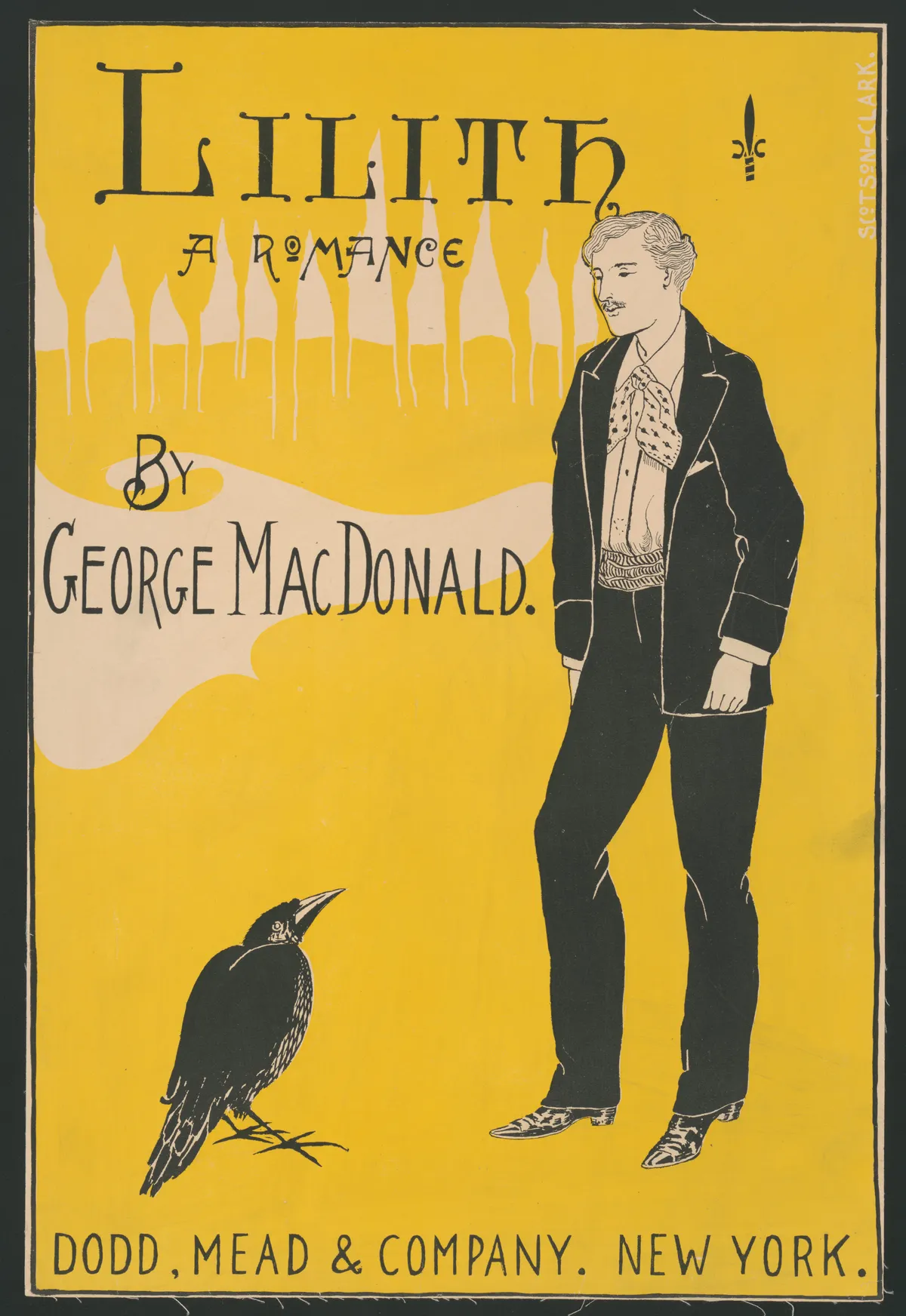
George MacDonald (1824-1905) was a minister and one of the first modern writers of fantasy fiction. He convinced his friend, the Reverend Charles Dodgson (aka Lewis Carroll) to publish the Alice books and you know how I feel about those two books. Both J.R.R. Tolkien and C.S. Lewis were huge fans of MacDonald and were deeply influenced by his work.
Lilith is a mythical figure from medieval Jewish folklore, predates MacDonald's book by several hundred years. According to legend, she was Adam's first wife in the Garden of Eden. When she refused to submit to Adam, she fled the Garden. She becomes a demon who steals babies. She's also a succubus who seduces men while they sleep.
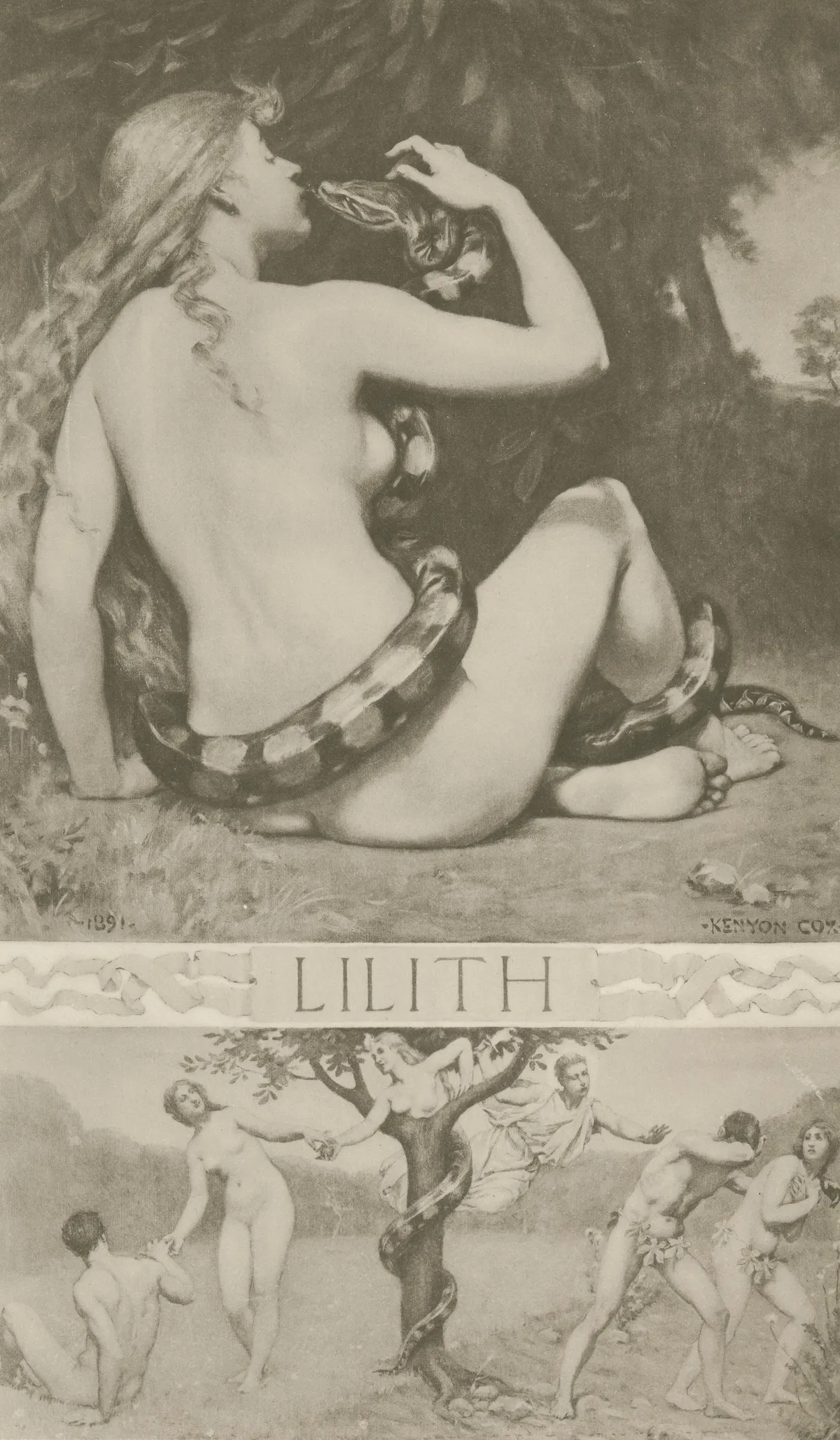
Like most mythical figures, Lilith has been adapted and reinterpreted over and over again. No one owns Lilith and there are countless versions of her.
DC and Marvel both have a versions of Lilith, who has been comicbookized (it is word!) for decades:
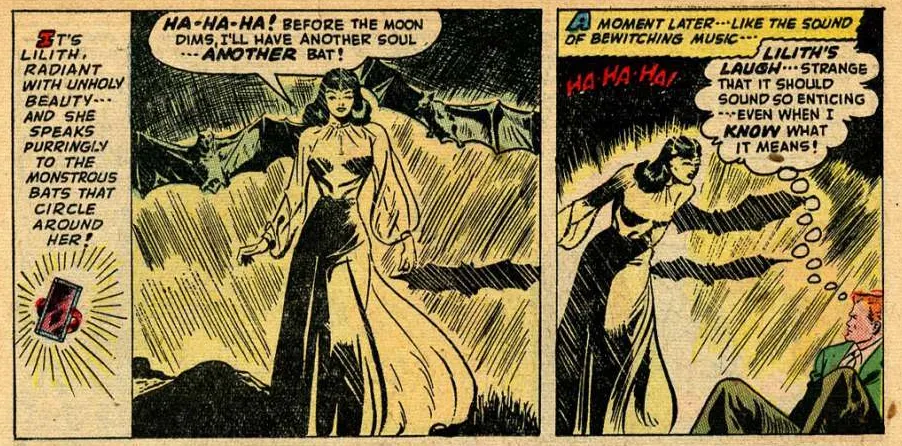
The tale of Lilith being an evil spirit is, as scholars say, "patriarchal bullshit." In the twentieth century, feminists reclaimed Lilith as a icon of sorts. Oh, she refused to submit to Adam? Good for her! God cast her out of Eden? Sounds good. Thus we had Lilith Fair for instance. The history is as long as it is fascinating.
Circling back to MacDonald's book, scholars have spent a great deal of time debating the precise role Lilith plays in Macdonald's novel. She isn't the main character and her name isn't mentioned until about halfway through the book. The main character who narrates the book is Mr. Vane who is an English gentleman who enjoys time in his country home, particularly the library.
He sees a ghost, an old man dressed in black. The loyal butler of the house, who has been there far longer than Mr. Vane is fairly lackadaisical about the ghost and basically tells Mr. Vane, "Oh, yeah, that ghost had been around since your grandfather's time. We don't talk about him." OK, then! Why are you even making a fuss, Mr. Vane?
Soon, Vane tumbles through a magic mirror and finds himself in a strange world where he meets the ghost, Mr. Raven, who sometimes appears as raven and sometimes as a person. They have dizzying conversations that Vane struggles to understand and Mr. Raven doesn't seem too keen on helping him understand what is going on:
I do not at all understand you!”
“You turned away, and would not understand!” I held my peace.—But if I did not say something, he would go!
“And my grandfather—is he also with you?” I asked.
“No; he is still in the Evil Wood, fighting the dead.”
“Where is the Evil Wood, that I may find him?”
“You will not find him; but you will hardly miss the wood. It is the place where those who will not sleep, wake up at night, to kill their dead and bury them.”
“I cannot understand you!”
“Naturally not. Neither do I understand you; I can read neither your heart nor your face. When my wife and I do not understand our children, it is because there is not enough of them to be understood. God alone can understand foolishness.”
“Then,” I said, feeling naked and very worthless, “will you be so good as show me the nearest way home? There are more ways than one, I know, for I have gone by two already.”
“There are indeed many ways.”
“Tell me, please, how to recognise the nearest.”
“I cannot,” answered the raven; “you and I use the same words with different meanings. We are often unable to tell people what they NEED to know, because they WANT to know something else, and would therefore only misunderstand what we said. Home is ever so far away in the palm of your hand, and how to get there it is of no use to tell you. But you will get there; you must get there; you have to get there. Everybody who is not at home, has to go home. You thought you were at home where I found you: if that had been your home, you could not have left it. Nobody can leave home. And nobody ever was or ever will be at home without having gone there.”
“Enigma treading on enigma!” I exclaimed. “I did not come here to be asked riddles.”
“No; but you came, and found the riddles waiting for you! Indeed you are yourself the only riddle. What you call riddles are truths, and seem riddles because you are not true.”
“Worse and worse!” I cried.
“And you MUST answer the riddles!” he continued. “They will go on asking themselves until you understand yourself. The universe is a riddle trying to get out, and you are holding your door hard against it.”
The book is chock full of such conversations, each more baffling than the last.
Vane goes on great adventures filled with fantastic landscapes, dancing skeletons, children who never grow up, stunted "giants," and finally ends up in the city of Bulika which is ruled by an evil princess, Lilith, whose life Vane had unwittingly saved.
Then, Vane is told by Mr. Raven, who is actually Adam (yes, the original Adam), that he has done everything wrong and has to do it all again. So he does. Vane's goal changes from wanting to kill Lilith, who has sucked the blood of both Vane and children to maintain her youthful beauty, to trying to redeem her for he both loves and despises her. The book is filled with arcane Christian allegory, which I will admit I found a little difficult to grasp. Perhaps, I am just not metaphysical enough.
I'll admit, the book is a slog at times. You know the really boring part of Lord of the Rings where Gollum is leading Frodo and Sam to Mordor? And it just page after page of them wandering around cold, wet, and miserable? Lilith is filled with chapters like that as Vane walks and walks and walks and we hear him consider ever damn twig and pebble he steps on. Oof... it is a lot. So, enter at your own risk and be prepared to skim.
In the meantime, here's a cool song about Lilith:
Reading Gutenberg by John Jackson is licensed under CC BY-SA 4.0

